
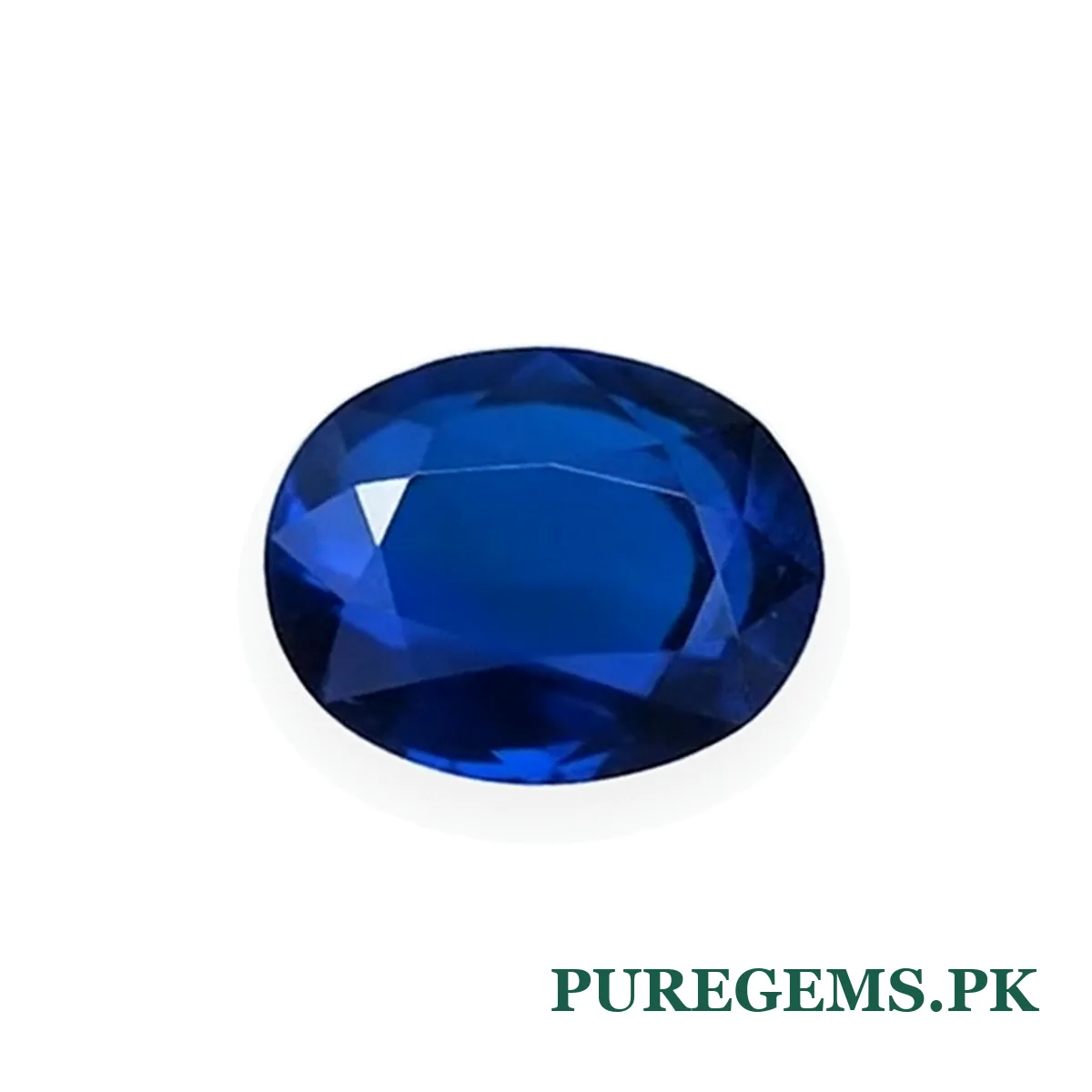
"Which stone is for my rashi?" is the question we hear more than any other, in the showroom and on WhatsApp. The answer has two layers. The simple one — the stone of the planet that rules your moon sign — is the table below and is what most people are looking for. The proper one, which every experienced astrologer will tell you, is that a gemstone is prescribed from the whole birth chart, not the sign alone, and that some stones should never be worn casually. This guide gives you both layers: the rashi-to-stone table with local names, the nine planetary gems (navaratna), the rules for wearing each stone, the trial period, and honest notes on price and authenticity so that you buy a stone that is both suitable and genuine.
Gemstones by rashi (moon sign)
In Jyotish, your rashi is the zodiac sign the Moon occupied at your birth. Each sign has a ruling planet, and each planet has a gemstone. This is the traditional primary stone for each sign:
| Rashi | Western sign | Ruling planet | Primary gemstone | Local name |
|---|---|---|---|---|
| Mesh | Aries | Mars (Mangal) | Red Coral | Marjan / Moonga |
| Vrishabh | Taurus | Venus (Shukra) | Diamond / White Sapphire | Heera / Safed Pukhraj |
| Mithun | Gemini | Mercury (Budh) | Emerald | Zamurd / Panna |
| Kark | Cancer | Moon (Chandra) | Pearl | Moti |
| Simha | Leo | Sun (Surya) | Ruby | Yaqoot / Manik |
| Kanya | Virgo | Mercury (Budh) | Emerald | Zamurd / Panna |
| Tula | Libra | Venus (Shukra) | Diamond / White Sapphire / Opal | Heera / Safed Pukhraj / Opal |
| Vrishchik | Scorpio | Mars (Mangal) | Red Coral | Marjan / Moonga |
| Dhanu | Sagittarius | Jupiter (Guru) | Yellow Sapphire | Pukhraj |
| Makar | Capricorn | Saturn (Shani) | Blue Sapphire | Neelam |
| Kumbh | Aquarius | Saturn (Shani) | Blue Sapphire | Neelam |
| Meen | Pisces | Jupiter (Guru) | Yellow Sapphire | Pukhraj |
If you know only your date of birth and not your rashi, note that Western "sun signs" and Vedic moon signs are calculated differently and often differ by one sign; an astrologer or a Vedic chart calculator will give you the correct rashi from your birth date, time and place.
The nine planetary gems (navaratna)
Jyotish recognises nine planets (navagraha), including the lunar nodes Rahu and Ketu, and assigns each a gem. Substitute stones (uparatna) are traditionally allowed when the primary stone is beyond budget, though they are considered milder.
| Planet | Primary gem | Common substitutes | Associated with |
|---|---|---|---|
| Sun (Surya) | Ruby (Manik) | Red Garnet, Red Spinel | Authority, vitality, father, confidence |
| Moon (Chandra) | Pearl (Moti) | Moonstone | Mind, emotions, mother, peace |
| Mars (Mangal) | Red Coral (Moonga) | Carnelian (red Aqeeq), Red Jasper | Energy, courage, property, siblings |
| Mercury (Budh) | Emerald (Panna) | Peridot, Green Tourmaline, Green Aqeeq | Intellect, speech, trade, study |
| Jupiter (Guru) | Yellow Sapphire (Pukhraj) | Citrine, Yellow Topaz | Wisdom, wealth, children, teachers |
| Venus (Shukra) | Diamond (Heera) | White Sapphire, White Zircon, Opal | Love, marriage, luxury, arts |
| Saturn (Shani) | Blue Sapphire (Neelam) | Amethyst, Lapis Lazuli, Blue Tourmaline | Discipline, karma, longevity, service |
| Rahu | Hessonite Garnet (Gomed) | Orange Zircon | Ambition, foreign lands, illusion |
| Ketu | Cat's Eye (Lehsunia) | Tiger's Eye | Spirituality, detachment, intuition |
Why the chart matters more than the sign
A gemstone strengthens its planet. That is a benefit only if the planet is a friend to your chart — the lord of your ascendant, of a trine house, or a yogakaraka — and a problem if the planet is a malefic for you. This is why the same stone is recommended for one Capricorn and forbidden to another, and why the powerful stones (Neelam, Manik, Pukhraj, Moonga, Gomed, Lehsunia) are worn only after a reading. A reputable astrologer will consider:
- the ascendant (lagna) and its lord, which many consider more important than the moon sign;
- the current dasha (planetary period) and transits such as Sade Sati;
- which planets are weak and need support versus which are strong and should not be strengthened further;
- combinations of stones that should not be worn together (for example Neelam with Manik or Moonga, or Pukhraj with Heera, in most readings).
We are gemologists, not astrologers, and we do not diagnose charts. What we do is supply a natural, untreated stone of the right weight, in the right metal, and back it with a return window long enough for the trial period.
How to wear each stone
| Stone | Finger | Metal | Day & time to first wear | Mantra |
|---|---|---|---|---|
| Ruby (Manik) | Ring finger | Gold / copper | Sunday, sunrise | Om Suryaya Namah |
| Pearl (Moti) | Little finger | Silver | Monday, morning | Om Chandraya Namah |
| Red Coral (Moonga) | Ring finger | Gold / copper | Tuesday, morning | Om Mangalaya Namah |
| Emerald (Panna) | Little finger | Gold / silver | Wednesday, morning | Om Budhaya Namah |
| Yellow Sapphire (Pukhraj) | Index finger | Gold | Thursday, morning | Om Gurave Namah |
| Diamond / White Sapphire | Middle or ring finger | Silver / white gold / platinum | Friday, morning | Om Shukraya Namah |
| Blue Sapphire (Neelam) | Middle finger | Silver / white gold / panchdhatu | Saturday, evening | Om Shanicharaya Namah |
| Hessonite (Gomed) | Middle finger | Silver / panchdhatu | Saturday, evening | Om Rahave Namah |
| Cat's Eye (Lehsunia) | Little or middle finger | Silver / panchdhatu | Tuesday or Thursday, evening | Om Ketave Namah |
Common to all: the stone should be natural and untreated, set in an open-back mount so it touches the skin, purified before first wear (soaked overnight in raw milk, Ganga jal or clean water), and worn on the working hand — the right for most people. Weight is traditionally a minimum of 2–5 carats depending on the stone and the wearer's build; your astrologer will specify.
The trial period — and why our return policy matters
Tradition holds that a stone should be tested before it is committed to: worn tied to the arm or in a loose setting for three to seven days while you observe your sleep, health, mood and fortune. If the period is calm or good, the stone is kept; if it is unusually troubled, it is set aside. We support this directly: every stone from Pure Gems can be returned within seven days under our return policy, so an astrological trial costs you nothing.
Authenticity: the part that is not optional
An astrological stone works, in the tradition, only if it is natural. Glass, synthetic corundum, glass-filled ruby, dyed quartz and resin-filled emerald are all sold as rashi stones every day in Pakistan. Insist on a natural, untreated stone with a certificate, and for valuable stones an independent laboratory report. Our Authenticity & Trust page explains how each stone is inspected, and Real vs Fake Gemstones gives the home checks.
What rashi stones cost in Pakistan (2026)
Indicative per-carat ranges for natural stones of astrological grade (untreated or minimally treated, eye-clean or lightly included):
| Stone | Astrological grade, per carat | Typical 3–5 ct stone |
|---|---|---|
| Blue Sapphire (Neelam) | Rs 10,000 – 60,000 | Rs 30,000 – 250,000 |
| Yellow Sapphire (Pukhraj) | Rs 9,000 – 40,000 | Rs 27,000 – 180,000 |
| Ruby (Manik) | Rs 8,000 – 50,000 | Rs 25,000 – 200,000 |
| Emerald (Panna) | Rs 12,000 – 60,000 | Rs 36,000 – 250,000 |
| Pearl (Moti) | Rs 1,000 – 8,000 | Rs 4,000 – 35,000 |
| Red Coral (Moonga) | Rs 1,500 – 6,000 | Rs 6,000 – 30,000 |
| Hessonite (Gomed) | Rs 1,000 – 5,000 | Rs 4,000 – 25,000 |
| Cat's Eye (Lehsunia) | Rs 2,000 – 15,000 | Rs 8,000 – 70,000 |
Ranges are indicative for 2026 and move with quality, origin and the dollar rate; live prices are shown on every stone in our collection. A "certified Neelam" at Rs 2,000 per carat is not a Neelam.
Frequently asked
Can I wear my rashi stone without consulting an astrologer? For the milder stones — pearl, moonstone, amethyst, aqeeq, citrine — most traditions consider it safe. For Neelam, Manik, Pukhraj, Moonga, Gomed and Lehsunia, a reading is strongly advised.
Can I wear two stones together? Only if their planets are friends in your chart. Common permitted pairs include Pukhraj with Manik or Moti, and Neelam with Panna or Heera; Neelam with Manik or Moonga is generally avoided.
Does the stone lose power? Tradition says a stone should be cleaned regularly and re-energised on its planet's day; a chipped or cracked stone is usually replaced. See our Gemstone Care Guide.
Ring or pendant? A ring on the correct finger is the classic method; a pendant that touches the skin is an accepted alternative, particularly for pearl and for people who cannot wear rings at work.
Buy your rashi stone with confidence
Pure Gems supplies natural, inspected stones for every planet, states any treatment on the listing, provides certification, and sets your stone in a custom 925 silver, panchdhatu or gold ring or pendant to the correct design. Start with the most-requested stones — Neelam, Pukhraj, Yaqoot, Zamurd and Moti — or send us your astrologer's recommendation on WhatsApp and we will suggest suitable stones and weights. Cash on Delivery to Lahore, Karachi, Islamabad and all of Pakistan.